
Comparing British, French, & Spanish Colonies
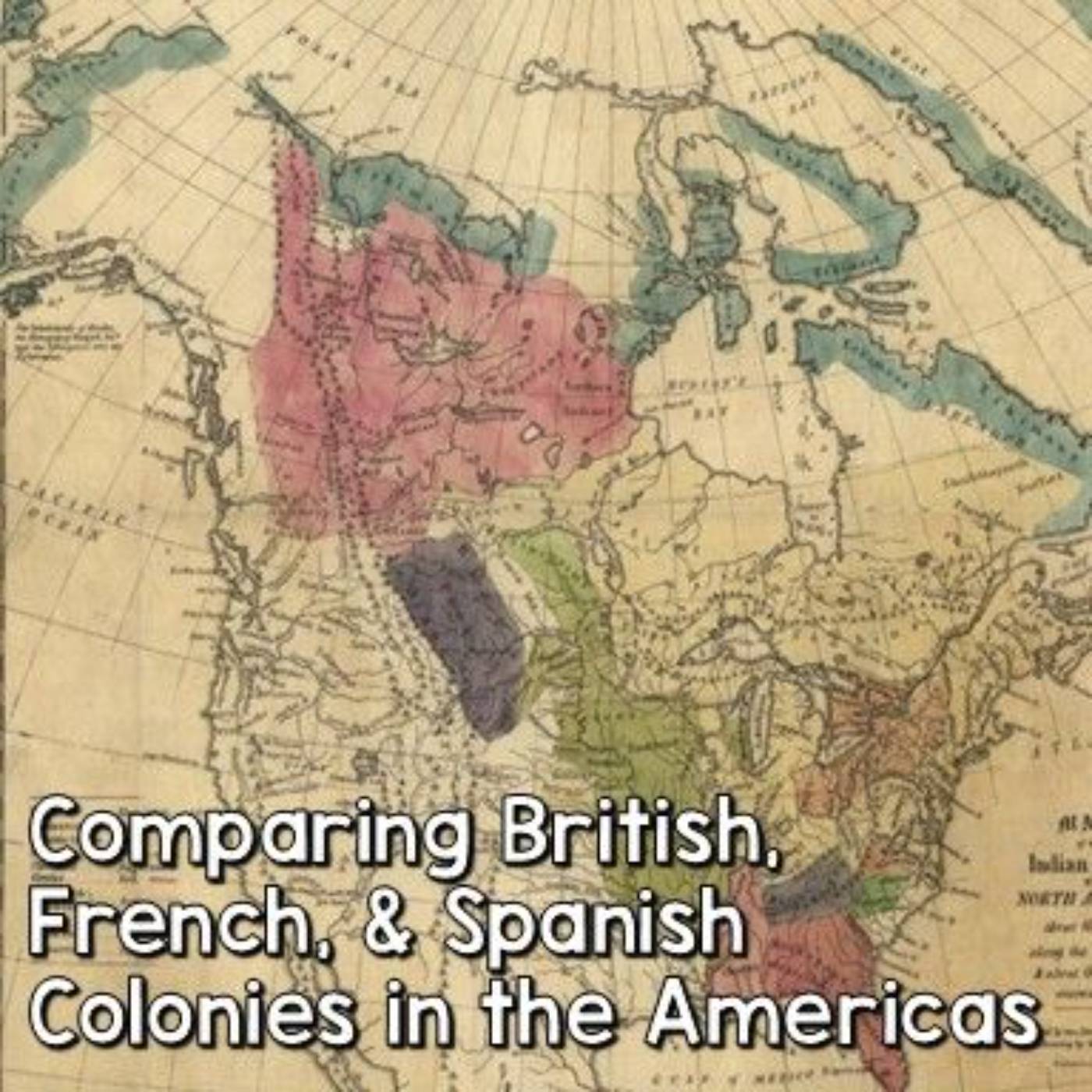
While English colonists were settling in New England and Virginia, both Spain and France also established major colonial settlements in North America during the sixteenth and seventeenth centuries.
The three countries had different goals in their settlement of the New World and therefore there were different settlement patterns. British North America saw family farms in New England and larger plantations in the South with tobacco and other cash crops. The fur trade was the dominant economic activity in New France. The Spanish established mines and large sugar plantations in their colonies.
The British Colonies in North America
The English failed to find gold and silver in their American colonies. Instead, they looked to make money in other ways. In the Southern British Colonies like Virginia and the Carolinas, colonists used a plantation model. The colonists grew large quantities of tobacco and cotton, which were both labor-intensive crops. Plantation owners relied on indentured servitude and the labor of enslaved Africans to do their work. This brought them great wealth.
The New England and Middle Colonies both mostly operated on a family-farm model. By 1660 there were 24,000 colonists (eight times the population of New France). Settlement focused on the family farm and town life.
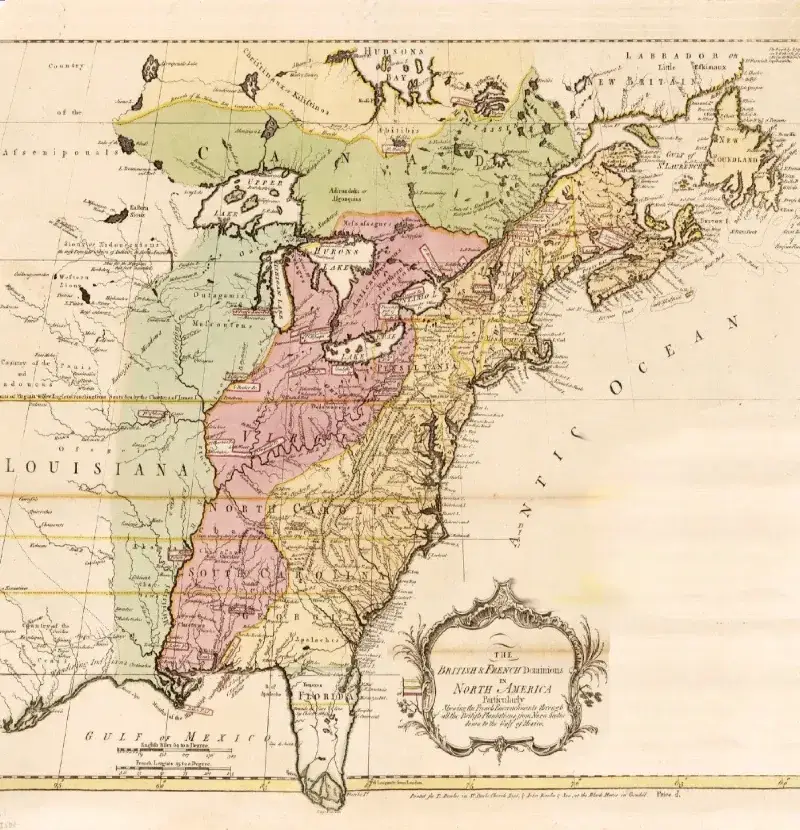
As towns grew, they operated as trading hubs. Cities like Boston and Philadelphia thrived as seaports.
Native American populations helped the English settlers stay alive, giving them supplies and teaching them how to survive. However, the English colonists did not treat the Native Americans well in return, resulting in many conflicts and all-out war
French Colonies in North America
The first French colony, Acadia, was founded in 1604, followed by Quebec. By 1660 there were about 3,000 people living in New France. The French claimed most of the modern-day Midwest, Louisiana, and Canada, but there were much fewer colonists than in the English and Spanish settlements.
French settlement was based on the fur trade, based on a balanced exchange with the Native Americans. Since everyone was reliant on others for survival, class distinctions here were not as sharp as they were in France. Indigenous peoples taught the French settlers how to survive, and saw them more as an ally and partner than the British.
One outlier was the French colony in Saint-Domingue (modern day Haiti) in the Caribbean. On this island, the French established large sugar plantations that used the forced labor of enslaved African men, women, and children.
New Spain
The Spanish were the first Europeans to establish large settlements in the New World. These were mostly in the Caribbean, modern-day Mexico, and in South America. The Spanish established large projects to exploit the resources of these areas, including sugar plantations in the Americas and the Caribbean, and gold mines in Mexico.
Spain created the Encomienda System to extract wealth from its colonies. This system granted settlers the right to forced labor by essentially enslaved Native Americans in exchange for the promise of protection and conversion to Christianity.
The Spanish Crown tried to frame this as mutually beneficial. However, in reality it was a brutal, coerced labor system that killed untold numbers of indigenous people.