
Understanding the Electoral College
This lesson is designed to ensure your students understand the process of how the president is elected, along with examples of how it has elections in US History.
Learning Objective: After learning about the Electoral College, students will be able to analyze the significance of contested elections and explain the benefits and drawbacks of the Electoral College.

Grade level
Middle school / early high school (best fit: grades 7–10)
Class Time
1–2 class periods (45–90 minutes)
What Students Will Learn
Students will understand that:
- Americans vote for president through a system using electors (not a direct national popular vote).
- There are 538 electoral votes total, and a candidate needs 270 to win.
- Most states use a winner-take-all approach, meaning winning a state (even narrowly) typically wins all its electoral votes.
- It’s possible to win the national popular vote but lose the election, which has happened in U.S. history (including modern examples).
Warm-up
Prompt: “Whoever gets the most votes wins the presidency.” In a few sentences, explain why this statement is true or false.
Direct instruction
Use either the PowerPoint, Google Slides, or video lesson to cover the basics of the Electoral College. Students can be provided with the guided notes worksheet or interactive notebook foldable to follow along with the presentation. A good supplemental video to use after the presentation can be found here.
Verdict Walk
Divide your classroom into three areas:
- KEEP the Electoral College
- END the Electoral College
- CHANGE the Electoral College
Students need to get up and move to one of the three areas of the room based on their opinions. If you have sticky notes, you can have students explain the reasoning for where they are on them and post it up. Otherwise, they can just share their reasoning aloud.
Ask students in different groups questions to encourage them to share more. For example, would small states lose power in a popular vote? Does modern technology make a popular vote more reasonable? Are winner-take-all outcomes fair?
Group or Independent Work
Next, provide students with the reading "Understanding the Electoral College" along with the analysis questions. Students can work together on the analysis questions before completing a Claim/Evidence/Reasoning paragraph.
Lesson Plan Materials & Downloads

Lecture Slides & Presentation
Click here to access a Google Slides version of the presentation or use the button below for a PowerPoint option to use with your students. You can also use this "flipped classroom" video option for the lesson as well.
Download the PowerPoint File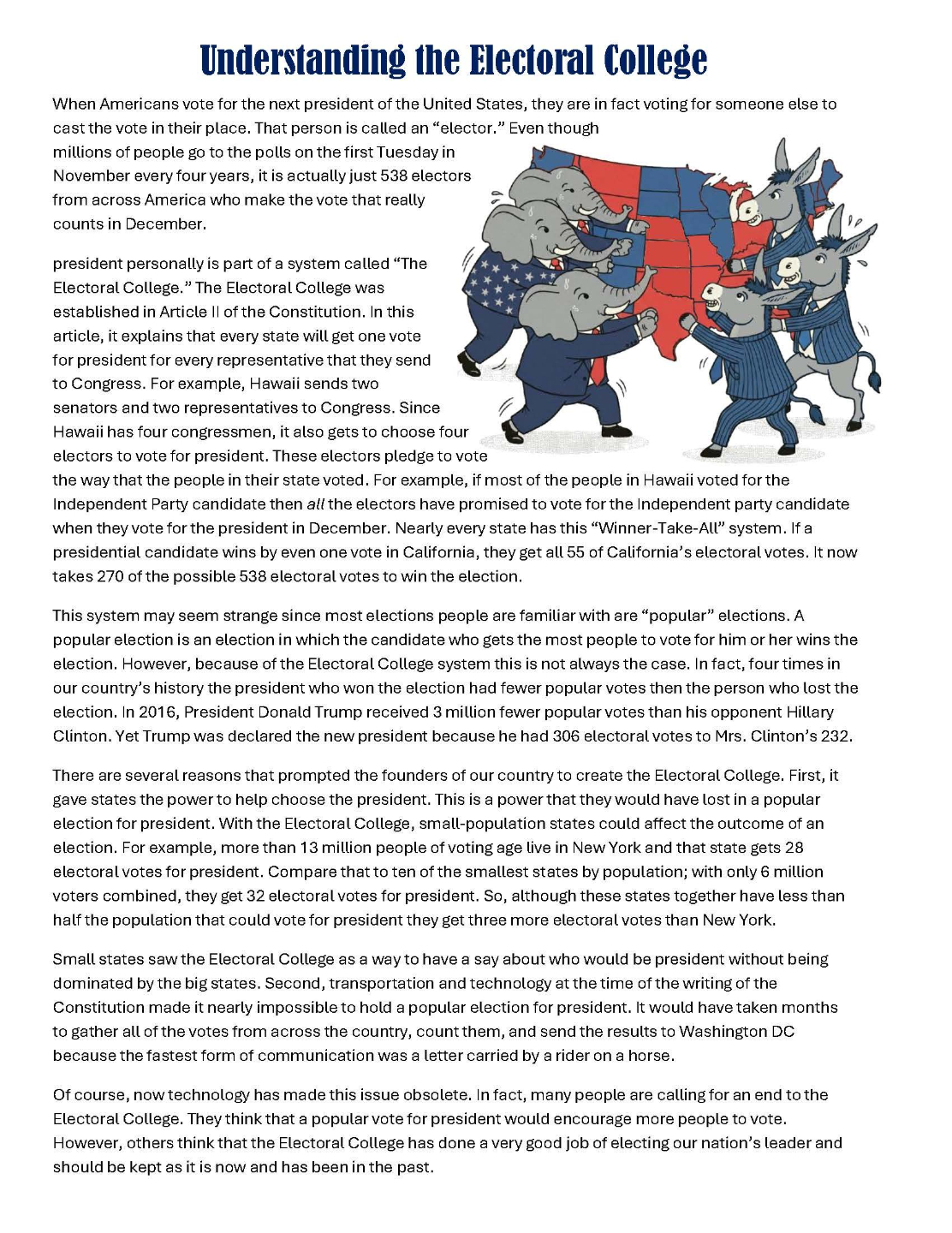
Student Handouts
Here you will find the all the materials for the lesson itself, including the guided notes worksheet, interactive notebook page, reading, and exit ticket worksheet.
Download the Lesson Materials PDF