Women Who Changed the World: Resources for Women’s History Month
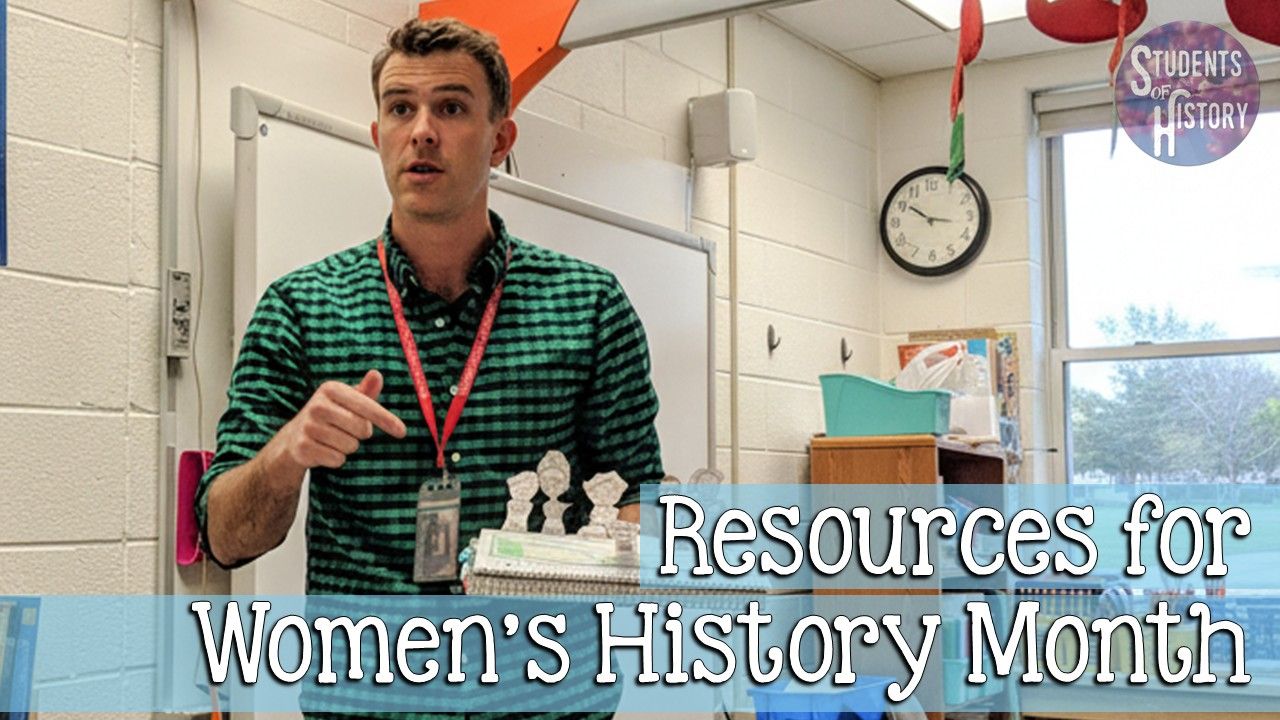
Every March, teachers across the country celebrate Women’s History Month by highlighting the remarkable women who shaped our world.
However, finding lessons that go beyond the usual few figures can be a challenge. Unfortunately, most curricula still lack the female scientists, writers, activists, and everyday heroes who changed history.
That’s why I love using projects, mini lessons, and simple activities to introduce students to a wide range of women across time periods, regions, and cultures.
Below are 10 classroom-ready lessons that showcase women who made history. Each one is easy to implement in a single class period or as part of a broader Women’s History Month project.
1) Women’s History Month Sculpture Garden Project
I love this PBL activity a creative and meaningful way to celebrate women’s contributions to history. Students design a “Women’s History Sculpture Garden” for their community. They choose women to honor, research their lives, and present their ideas through sketches, models, or digital slides.
It includes 18 short biographies of influential women from both U.S. and World History, plus teacher directions, rubrics, and student planning templates. It connects art, history, and civic engagement while helping students reflect on representation and recognition.
2) Empress Theodora Source Analysis
In this simple activity, students analyze primary and secondary sources about Empress Theodora, one of the most powerful women of the Byzantine Empire. They evaluate her leadership, influence, and role in advancing women’s rights in the 6th century.
It's perfect for World History or a Byzantine Empire unit and helps kids practice source analysis while examining how women shaped politics and society long before the modern era.
3) Hidden Figures: Reading & Timeline
Introduce your students to Katherine Johnson, Dorothy Vaughan, and Mary Jackson, the brilliant Black women mathematicians who helped launch NASA into the Space Age.
This lesson includes a short reading, comprehension questions, and a timeline activity showing how their work influenced both the Space Race and the Civil Rights Movement.
I love this one because it blends STEM, history, and social justice — perfect for connecting to modern discussions of representation in science.
4) Joan of Arc Reading & Obituary Project
Students read about Joan of Arc’s life and martyrdom, then write a creative obituary summarizing her impact and legacy.
This resource combines history and writing in a way that deepens comprehension and empathy. This one is awesome for Medieval Europe units or as a stand-alone activity during Women’s History Month.
5) Anita Garibaldi & Nationalism Reading
In this short reading and worksheet, students learn about Anita Garibaldi, a revolutionary who fought alongside her husband Giuseppe Garibaldi for Italian unification.
It’s a great way to highlight women’s often overlooked roles in 19th-century independence movements and political revolutions. I like to pair this one with a discussion on how nationalism inspired both unity and conflict across Europe and Latin America.
6) Eleanor Roosevelt Reading & Activity
This reading and worksheet set focuses on Eleanor Roosevelt’s life and leadership during the Great Depression and World War II. Students examine her humanitarian work, advocacy for human rights, and role in shaping the United Nations.
The resource works great because it highlights both her political influence and her compassion. This gives students a balanced, human portrait of one of America’s most admired women.
7) Pocahontas Timeline Project & Reading
This lesson helps students analyze the life and legacy of Pocahontas, exploring both historical records and myths surrounding her story.
Students build a timeline to better understand early English-Native American relations and how narratives of the past are shaped. I like this one because it’s a respectful, critical look at one of the most complex women in early American history.
8) Rosa Parks Primary Source Analysis
Using excerpts from Rosa Parks’ own words, this activity lets students analyze her role in the Montgomery Bus Boycott and the broader Civil Rights Movement.
Why it’s powerful: It gives students direct access to primary sources — helping them understand how one person’s quiet defiance could spark nationwide change.
9) Queen Liliʻuokalani: Last Queen of Hawaii
This lesson introduces students to Queen Liliuokalani, Hawaii’s last reigning monarch. Through primary sources and short analysis questions, students explore imperialism, resistance, and cultural identity.
It's a perfect activity for your imperialism unit in US History or to highlight indigenous women’s perspectives on colonization.
10) Ballad of Mulan Source Analysis
Students read the ancient poem The Ballad of Mulan and distinguish between primary and secondary sources while analyzing themes of gender, duty, and family.
This is a great activity to connects history, literature, and critical thinking. It also shows how cultural storytelling preserves powerful female figures across generations.
Get Access to Every Lesson
All of these resources (and hundreds more) are also available through a subscription to Students of History.
You can choose a monthly or annual plan for World History, US History, Government, or Geography. Each one gets you instant access to everything you need: PowerPoints, readings, projects, digital notebooks, and assessments for every single unit.
Explore all the options at StudentsOfHistory.com and make Women’s History Month one your students will remember.
Want to try some lessons for free?
Try out some free lesson plans and resources for your social studies classroom!
Don't worry, your information is never shared.