12 Podcast Episodes History Teachers Should Listen to This Summer
Summer is the time to enjoy history for the pure pleasure of it. No lesson planning, grading, or standards to align to. Just you, a great story, and whatever's in your cup or your earbuds.
Whether you're sitting on the beach, taking a morning walk, driving with the windows down, or just relaxing over coffee before the rest of the house wakes up, a great history podcast is one of the best companions you can have. These are some of my absolute favorites.
Below you'll find entertaining: funny, gripping, and surprising listens that are full of stories and details you simply can't get from a textbook.
Each includes anecdotes that stop you mid-sip, moments that make you rewind, and facts that seem too wild to be true. Background knowledge that deepens how you teach a unit. This will become your secret weapon come September. History teachers are storytellers, and the best stories come from being a curious, engaged learner.
You'll have stories so good your students will put their phones do...
10 History Documentaries to Watch This Summer (And How to Use Them in Class)
Every summer I try to do two things: recharge, and come back to the classroom a little sharper than I left it.
One of the best ways I found to do both is watching great history documentaries. They're great for a night time watch or rainy afternoon.
These aren't going to be films you can show in full to your classes. It's kind of sad, but most middle and high school students can't sit through even a 45-minute episode in class. Attention spans are shorter, and that's just the reality we're working with.
What does work are 3-to-7-minute clips. Single scenes. Dramatic moments. Restored footage or a firsthand accounts that make the whole class go quiet. There are tons of these in the documentaries below. Half the value of watching them this summer is mining them for exactly that: jotting down timestamps, bookmarking scenes, and building a mental library of clips you can drop into a lesson at exactly the right moment.
So grab your phone or keep a notepad nearby. When a statistic, a piece...
Summer Reading List for History Teachers: 10 Books to Read on Summer Vacation
Every summer, I try to pick out a couple history books that can give me some deeper background about the subjects I'll be teaching in the next year. Not textbooks or general US History overviews or anything, but something focused on one single event or person that will make that unit or lesson more interesting for my students.
The best history books don't just fill in gaps in your content knowledge (though they do that, too). They give you stories. Anecdotes. Little moments that make students put down their pencils and lean in. The kind of thing you can't get from a textbook.
Below are 10 books I'd recommend picking up this summer if you teach middle or high school US History or World History. Some are classics. A few are more recent. All of them will give you something to bring into your classroom.
US History Books
1. 1776 by David McCullough
This one's perfect if you teach the American Revolution. McCullough makes the year 1776 feel like a thriller. I love that it so clearly ...
Women Who Changed the World: Resources for Women’s History Month
Every March, teachers across the country celebrate Women’s History Month by highlighting the remarkable women who shaped our world.
However, finding lessons that go beyond the usual few figures can be a challenge. Unfortunately, most curricula still lack the female scientists, writers, activists, and everyday heroes who changed history.
That’s why I love using projects, mini lessons, and simple activities to introduce students to a wide range of women across time periods, regions, and cultures.
Below are 10 classroom-ready lessons that showcase women who made history. Each one is easy to implement in a single class period or as part of a broader Women’s History Month project.
1) Women’s History Month Sculpture Garden Project
I love this PBL activity a creative and meaningful way to celebrate women’s contributions to history. Students design a “Women’s History Sculpture Garden” for their community. They choose women to honor, research their lives, and present their ideas through s...
10 Awesome Ancient Rome Resources for Middle School & High School
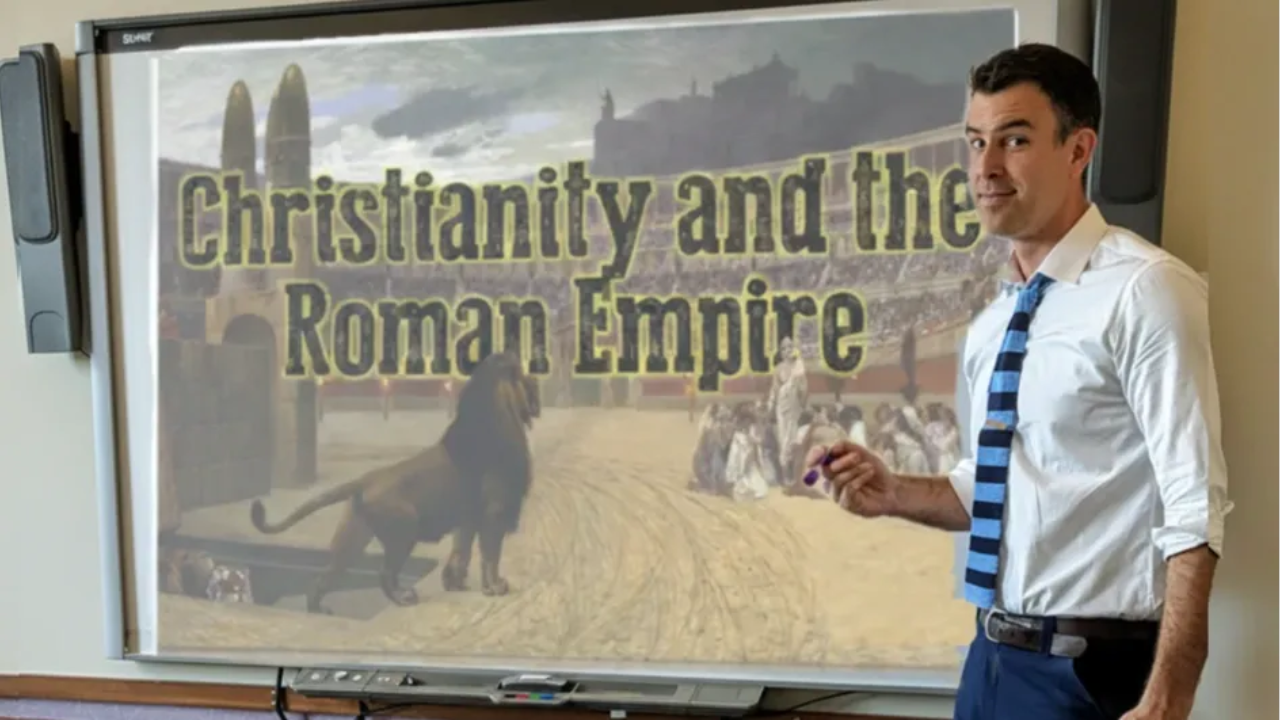
Ancient Rome is one of my absolute favorite units to teach in World History! From gladiators and emperors to the rise of Christianity and the fall of an empire - it's definitely fun stuff to cover with middle or high school students.
To make the story of Rome truly come alive though, your kids are going to need more than just names and dates. They need visuals, primary sources, and hands-on activities that help them connect with Roman life and legacy.
Here are 10 teacher-approved resources that make your Ancient Rome unit interactive and easy to teach. Each links you to a resource you can download and implement right away with your students.
Use this as your go-to list for bringing the Roman world to life in your classroom!
10 Awesome Resources for Ancient Rome
1) Pompeii and Mt. Vesuvius Reading
This dramatic reading takes students back to 79 CE when Mount Vesuvius erupted and buried the town of Pompeii. Students read a first-person narrative and answer worksheet questions to te...
Bring the Industrial Revolution to Life with Hands-On Activities
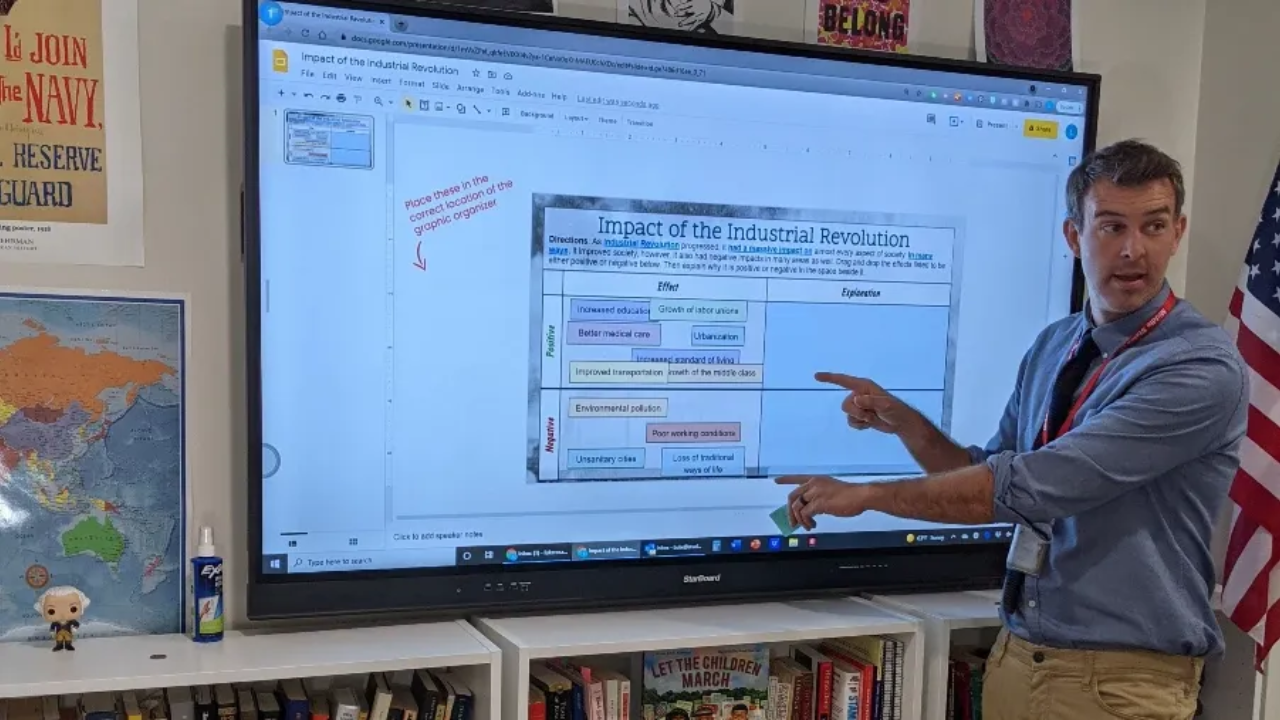
The Industrial Revolution is one of the most important units in your World History classroom. For a lot of students, it can also be one of the hardest to visualize though. Steam engines, textile mills, and assembly lines are new concepts for most kids and if you only lecture through them, it’s easy for students to tune out.
The key to making this unit engaging is to let students experience industrialization through interactive lessons, projects, and digital activities that show how innovation reshaped everyday life.
Here are some of my favorite hands-on resources and creative ideas to help bring the Industrial Revolution to life in your classroom.
1. What's Your Horsepower Activity
This classic, kinesthetic project lets students literally measure their own energy output! Using a stopwatch, stairs, and a simple formula, students calculate how much “horsepower” they can produce compared to a machine.
It’s a fun, inquiry-based way to introduce the concept of industrialization and h...
10 Engaging Resources for Teaching World War 1 in Middle & High School Social Studies
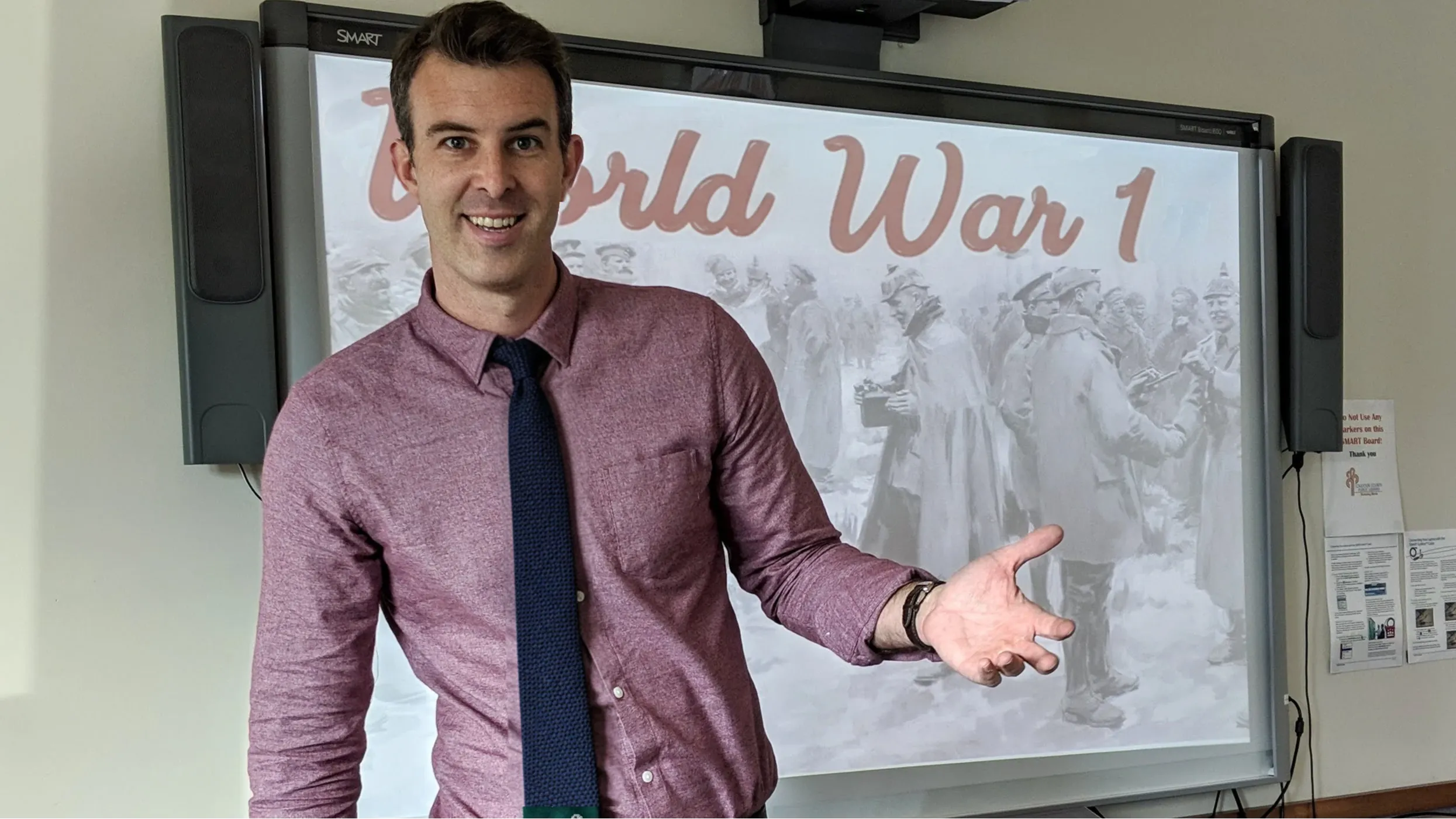
If you’re a middle or high school teacher planning a unit on World War I, you know how important it is to move beyond just the dates and battles. Students benefit most when lessons are interactive, visually rich, and help them think like historians.
Here I want to share with you 10 teacher-approved resources that build engagement, support critical thinking, and fit both middle and high school history classrooms. Each one links directly to a ready-to-use activity you can download right away.
Use this as your go-to list for ramping up your World War I instruction.
Top 10 WWI Teaching Resources
1. World War 1 Propaganda Analysis Activity
Analyzing propaganda helps students understand how governments mobilized citizens and shaped opinion during WWI. If you teach middle school, you can guide students through identifying message, audience, and techniques (thanks to media decoding frameworks. If you're a high school teacher, extend by asking students to compare propaganda from different...
Worksheet Packets for Civics, World, & US History
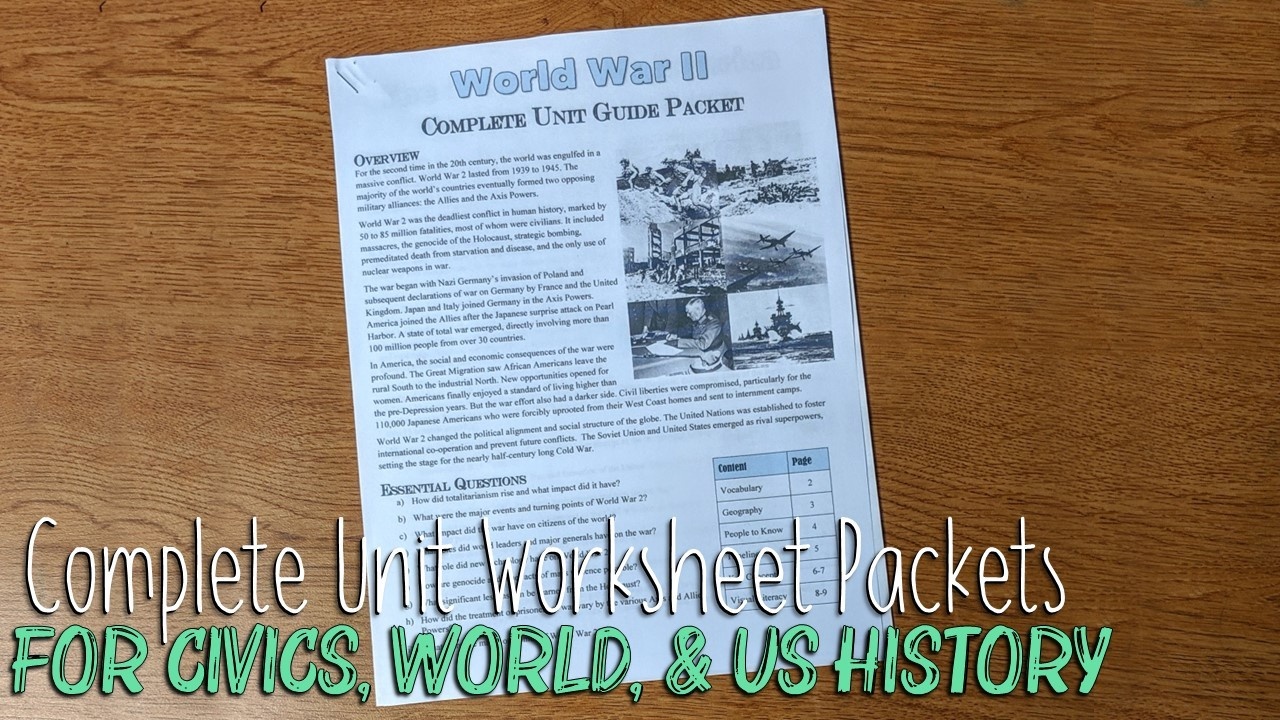
One of the most time and energy-saving strategies I started using in my social studies classroom was to employ unit guide packets for students.
These thorough 9-page packets were a huge help in a few ways:
- Printing the majority of student work at once each unit instead of each day.
- Students know exactly what they need to know for the test and have it in one place.
- If I'm ever out sick, students can just work on their packets.
They took a long while to create, but I now have packets for every unit in Civics/Government, World History, and US History. That's 48 total packets and over 400 pages of student worksheets!
Each one features an introductory reading, standards-based Essential Questions to guide the unit, and then 9 pages dedicated to vocabulary, geography, people, timelines, key concepts, and image analysis.
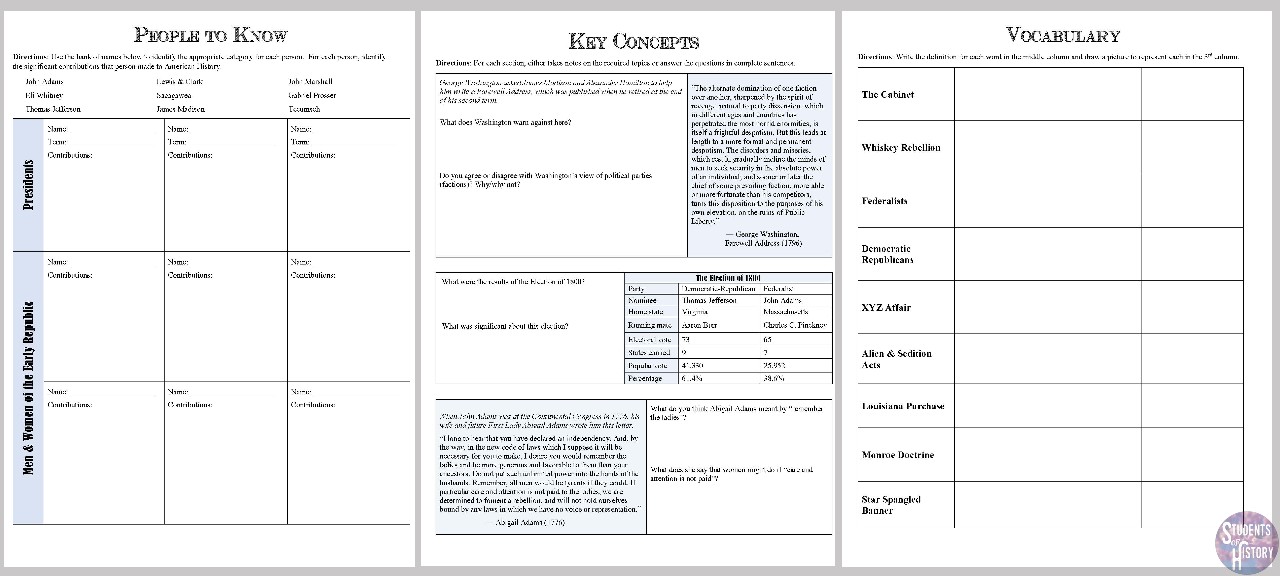
Here's a closer look at what's included on every page:
Unit Introduction
This page features a short reading on the unit that introduces students to the key ...
Students of History Subscription Preview
Are you curious about what's included with a Student of History subscription?
Well, let's take a look!
Here's a sneak peek of what your subscription will look like after you login. First, you'll be brought to your dashboard where you'll see the curriculum that you have. It could be Civics, World, or US History.
After clicking on your curriculum, you’ll see all the units that are included. You get immediate access to all of them immediately after signing up. So, no matter where in the curriculum your course begins, you can get started right away.
From there, just click on any unit you want to start with and you’ll see it is broken down by day. Most units are between 7-10 days long. That is based on longer block-scheduled classes. So, if you teach daily 45-minute classes, you might need to break up each day’s lesson over two periods.
The lessons are designed to be easy to understand quickly, so you don’t need to slog through a bunch of pages to find out how to teach with the mate...
Comparing Pandemics Lesson Plans: COVID, Plague, and the Spanish Flu
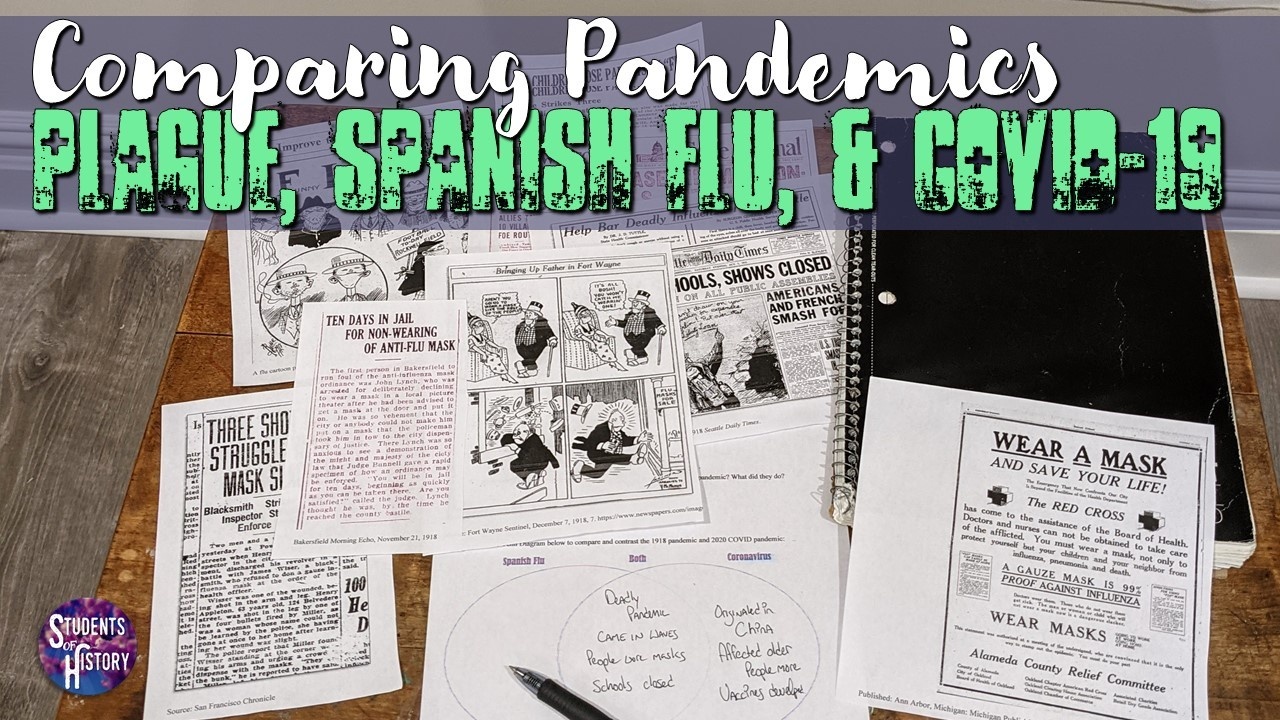
If you're teaching social studies through the COVID-19 pandemic, you've likely tried to connect this moment in history with events in the past from your curriculum.
Since I have both World History and US History, I wanted separate lessons that would allow students to see connections to history from what they have lived through.
To do this, I developed these two lessons. The first one is for US History and allows kids to analyze primary sources from the 1918 "Spanish Flu" pandemic. The second one for World History has students analyzing a primary source from the plague.
US History - The Spanish Flu of 1918 and Coronavirus
The 1918 Spanish Flu was one of the deadliest pandemics of all time. It affected nearly 1/3 of the entire world and killed millions.
It didn't develop in Spain, but earned the name because other nations censored any news of widespread sickness because of World War 1. Spain was neutral in the war and one of the few countries that accurately reported how deadly th...